
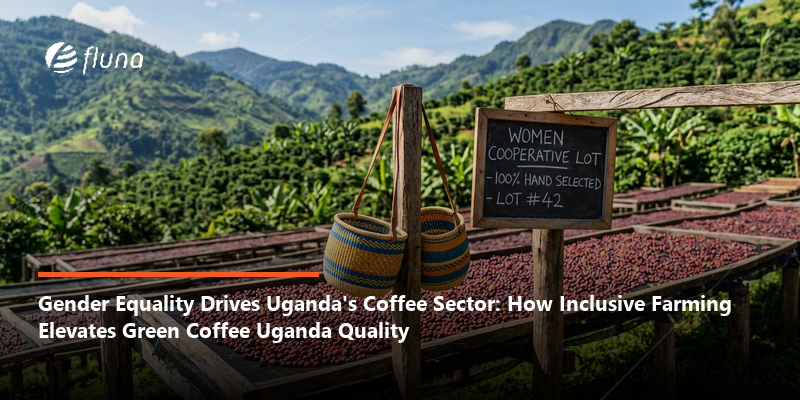
Gender equality drives Uganda's coffee sector: how inclusive farming links to supply quality
By Sandra Nansbuga
Gender Equality Drives Uganda's Coffee Sector: How Inclusive Farming Elevates Green Coffee Uganda Quality
Empowering female producers and establishing gender-inclusive leadership structures across rural smallholder cooperatives has emerged as a direct driver of physical harvest consistency and agricultural resilience in East Africa. International green coffee buyers evaluating origin sustainability and farmgate compliance increasingly recognize that gender equity is not merely an ethical milestone but an essential operational foundation. Analyzing how inclusive smallholder programs improve green coffee Uganda production reveals clear commercial linkages between female agronomic leadership, selective harvest discipline, and export lot uniformity.
Recent industry reporting published by Ugandan agricultural trade coverage and Daily Monitor highlights nationwide initiatives expanding female access to land titles, cooperative voting rights, and agronomic extension training. In coordination with global gender frameworks from the UN Food and Agriculture Organization and market equity studies from the International Coffee Organization, commercial roasters are integrating gender-inclusive sourcing into their core procurement strategies.
Inclusive Smallholder Economics and Green Coffee Uganda Lot Consistency
Across Uganda's major coffee regions—from Mount Elgon's high-altitude Arabica slopes to the Central and Western Robusta crescents—women provide up to 70% of the field labor required for weeding, selective cherry harvesting, and raised drying bed management. Historically, however, systemic barriers limited women's control over farm income and cooperative membership. When female farmers lack financial inclusion and formal agricultural training, post-harvest quality protocols often suffer from labor burnout and inadequate household reinvestment.
Targeted gender equity initiatives have transformed this dynamic by providing women with specialized training in cherry floatation sorting, micro-lot processing, and solar drying management. Producer groups that promote female leadership report measurable quality gains: cherry deliveries show significantly lower proportions of green, overripe, or insect-damaged cherries, directly reducing primary defect counts and quakers during roasting.
Furthermore, female-led farming households demonstrate higher reinvestment rates into organic compost application, multi-stratum shade trees, and children's education. This financial stewardship fosters long-term farm stability, regenerative soil health, and intergenerational supply security for international commercial roasters and specialty importers seeking resilient origin partners.
By shifting from fragmented smallholder purchasing to structured gender-inclusive cooperative partnerships, green coffee procurement teams secure traceable coffee that meets rigorous physical grading tolerances while delivering measurable social impact across origin communities.
| Cooperative Sourcing Model | Gender Governance Structure | Harvest & Post-Harvest Quality Impact | Physical Defect & Cup Score Metric | Buyer Supply Chain Advantage |
|---|---|---|---|---|
| Certified Gender-Inclusive Cooperatives | 50%+ female board representation and direct revenue access | Meticulous selective picking; optimized solar drying times | ≤1.5% primary defects; 84+ SCA specialty scores | High lot uniformity; auditable ESG and EUDR compliance |
| Women-Owned Micro-Lot Associations | 100% female-owned land parcels and washing stations | Strict cherry floatation sorting; specialized anaerobic lots | Zero quakers; vibrant phosphoric acidity and sweet body | Authentic single-origin brand storytelling for retail |
| Conventional Unregulated Supply Chains | Limited female participation in cooperative trade decisions | Rushed strip picking; uneven moisture on ground drying yards | Variable screen sizes; elevated mold and insect defect risk | High spot volatility and vulnerable farmgate traceability |
What this means for buyers
Contract Certified Gender-Equity Lots: Seek out export partners and cooperative unions that maintain verified gender equity programs, securing coffee with superior physical grading and lower defect counts.
Pay Quality and Gender Premiums Directly: Implement contract pricing structures that direct transparent quality premiums to female smallholders, ensuring funds are reinvested in agricultural tools and drying infrastructure.
Enhance Consumer Brand Storytelling: Showcase authentic female producer cooperatives on retail packaging to connect socially conscious consumers with verified origin impact narratives.
Audit Smallholder Traceability and Land Rights: Utilize cooperative digital ledgers to verify smallholder farm polygon boundaries and ensure female-headed households are fully mapped for European deforestation-free due diligence.
Support Cooperative Processing Equipment Upgrades: Co-invest with origin exporters in raised solar drying tables and cherry depulpers to optimize processing workflows managed predominantly by women.
Incorporate Social Metrics in Supplier Scorecards: Include gender inclusion and fair compensation metrics alongside moisture and screen size parameters when evaluating origin export performance.
Secure Multi-Year Purchasing Commitments: Establish multi-season forward contracts with gender-inclusive producer groups to provide farming families with the financial security required for long-term farm maintenance.
FAQ
Q: How does gender equality directly impact green coffee quality in Uganda?
A: Because women perform most harvesting and drying tasks, empowering them with training and income control leads to better cherry selection, controlled drying, and significantly fewer defects.
Q: What role do women play in Uganda's coffee production?
A: Women contribute up to 70% of field labor across Ugandan coffee farms, specializing in seedling nursery management, hand-picking ripe cherries, and drying yard monitoring.
Q: How can international roasters support gender-inclusive coffee in Uganda?
A: Roasters can purchase gender-verified micro-lots, pay direct quality premiums to female cooperatives, and commit to multi-year forward contracts that strengthen household financial stability.
Sources: Daily Monitor / Independent Uganda | UN Food and Agriculture Organization | International Coffee Organization