
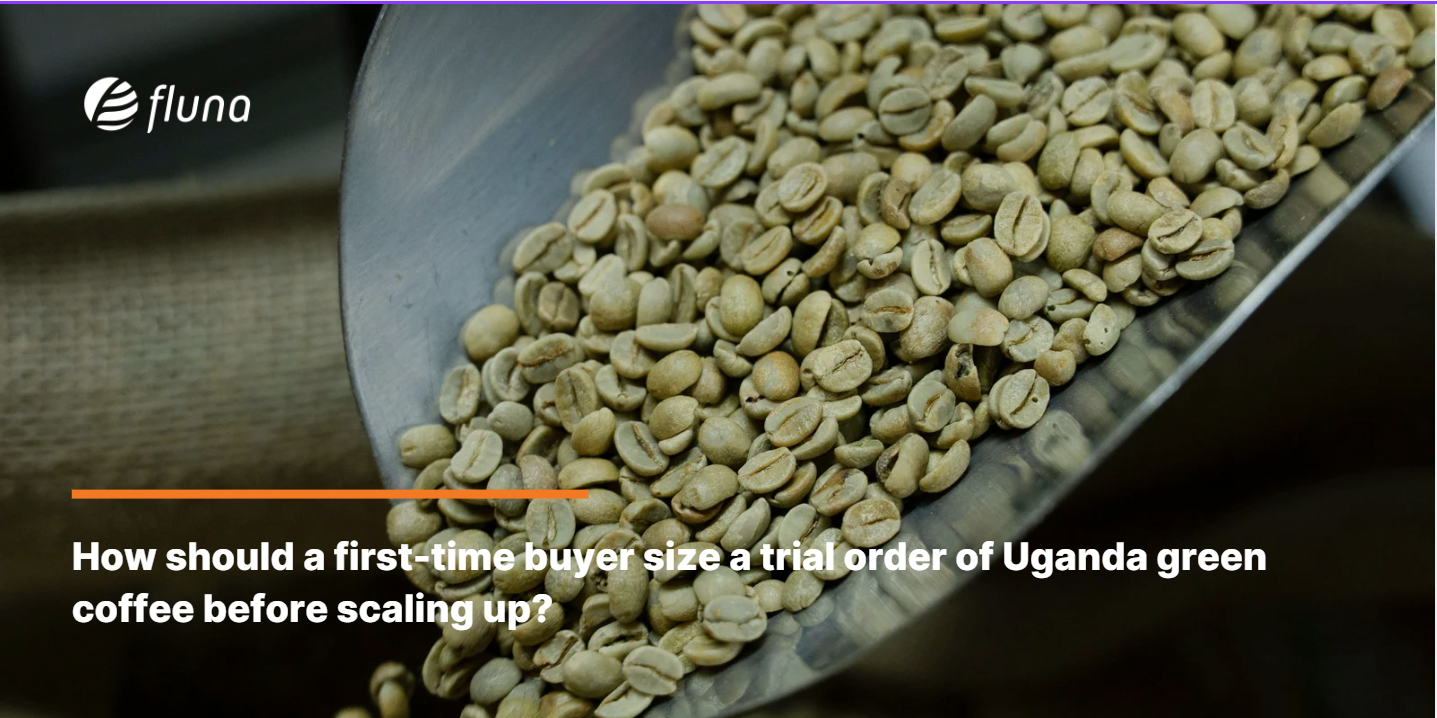
How should a first-time buyer size a trial order of Uganda green coffee before scaling up?
By Sandra Nansbuga
How to Size a Trial Order of Uganda Green Coffee Before Scaling Up
A first-time buyer can start importing Uganda green coffee with a cupping sample of 200 to 500 grams, then step up through a partial-load trial of 50 to 100 bags before committing to a full 20-foot container of roughly 320 bags and 19.2 metric tonnes. The Uganda green coffee minimum order quantity at most exporters is one 20-foot container, but licensed exporters commonly accommodate smaller trial lots for new buyers to establish a working relationship. Structuring the pilot in stages limits financial risk while letting you verify quality, grading, and logistics before you scale.A Standard Container Is the Reference Point
Uganda is a landlocked country, and virtually every bag of its export coffee flows through the Port of Mombasa in Kenya. According to the Kenya Ports Authority, Mombasa is the gateway to a vast hinterland that includes Uganda, and the port links East and Central Africa directly to over 80 ports worldwide. That corridor shapes how Ugandan export coffee is quoted, packed, and shipped. The industry reference lot is the 20-foot container. Per the Uganda Coffee Guide shipping logistics guide, a 20-foot container holds 320 to 325 bags of 60 kilograms each, a net coffee weight of 19.2 metric tonnes. The 40-foot container carries 440 to 460 bags, about 26.4 metric tonnes. Because exporters plan container utilization and freight around these figures, a full 20-foot load is the natural baseline for pricing and minimum order terms.The Staged Path From Sample to Scale
Before committing to any volume, request a pre-shipment sample. The Uganda Coffee Guide buyer resource notes that exporters typically ship 200 to 500 grams drawn from the specific lot on offer, delivered via courier within 5 to 10 business days. Roast and cup the sample against your reference standard before you place any order. If the sample clears, move to a partial-load trial. The same buyer guide states that the standard minimum order is one container of about 320 bags, while some exporters accommodate smaller trial orders of 50 to 100 bags for new buyers establishing relationships. Keep in mind that per-kilogram pricing is typically less favorable at lower volumes.How the Options Compare
| Stage | Quantity | Purpose |
|---|---|---|
| Cupping sample | 200 to 500 grams | Evaluate cup profile and grade against your spec |
| Partial-load trial | 50 to 100 bags (3 to 6 metric tonnes) | Verify grading, packing, shipment consistency |
| Full 20-foot container | 320 to 325 bags (19.2 metric tonnes) | Standard minimum order and scale baseline |
Check the Terms Before You Scale
Because a full container is the typical Uganda green coffee minimum order quantity, confirm in writing whether your exporter will quote a partial load, what price premium it carries, and which Incoterm applies at each stage. Verify that the coffee is graded and certified under the Uganda Coffee Development Authority export system, and that the sample you approved was drawn from the actual lot you are buying. Scaling from a verified partial load to a full container is the low-risk path for any first-time importer.FAQ
Q: What is the Uganda green coffee minimum order quantity?
A: Most exporters set a standard minimum of one 20-foot container, about 320 to 325 bags and 19.2 metric tonnes. Some licensed exporters will supply smaller trial orders of 50 to 100 bags for new buyers, though per-kilogram pricing is usually less favorable at that volume.
Q: What sample size should a first-time buyer request before placing an order?
A: Request a 200 to 500 gram pre-shipment sample drawn from the specific lot on offer. Exporters typically deliver it by courier within 5 to 10 business days, leaving time to cup the coffee against your reference standard before ordering.
Q: Why does Uganda coffee ship through Kenya?
A: Uganda is landlocked, and the Port of Mombasa in Kenya serves as the primary gateway for its exports. The Northern Corridor road route connects Kampala to Mombasa, and the port links Uganda and neighboring countries to more than 80 ports worldwide.
Sources: Kenya Ports Authority | Uganda Coffee Guide | Uganda Coffee Guide buyer resource