
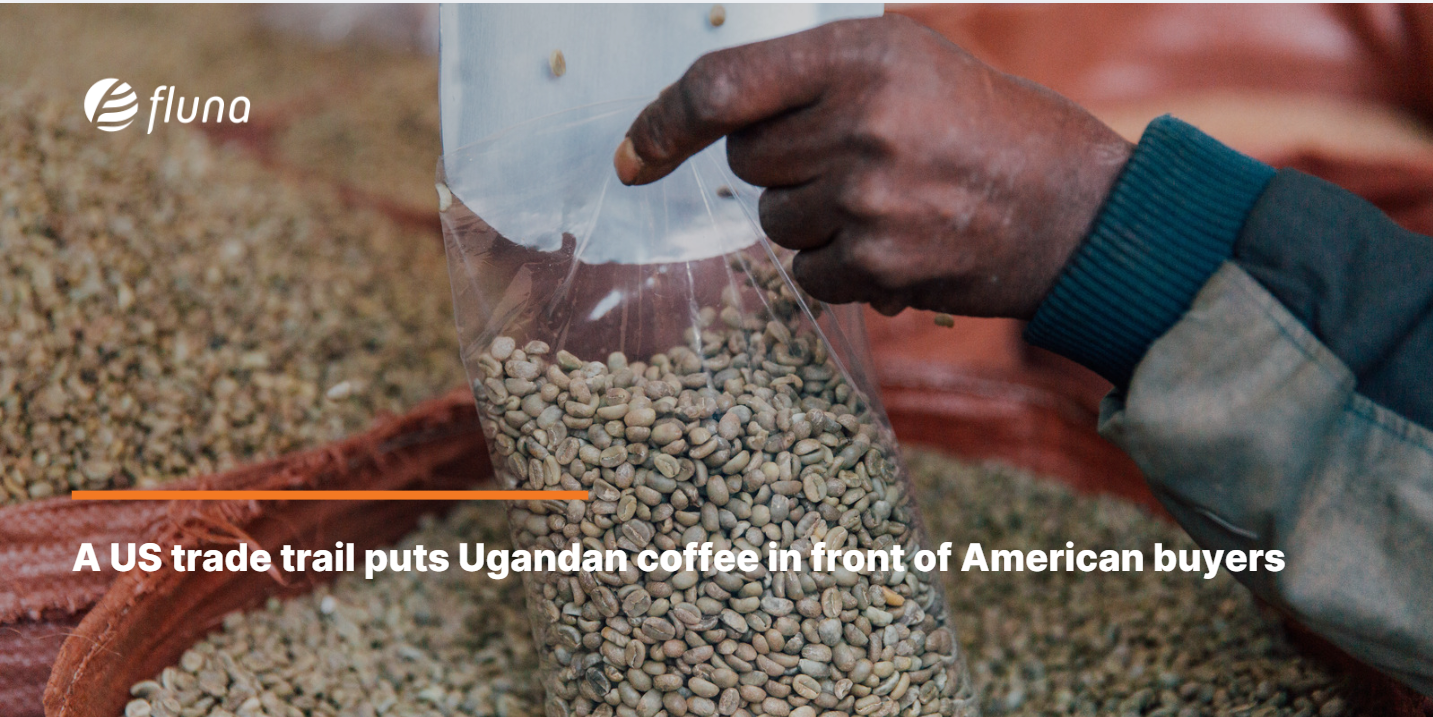
A US trade trail puts Ugandan coffee in front of American buyers
By Sandra Nansbuga
A US trade trail puts Ugandan coffee in front of American buyers
An indicative $1.2bn Roosevelt Africa Trail pipeline of Ugandan projects, including a branded Safari Coffee proposal aimed at US buyers, was presented in New York on 25 September 2026. It runs on different filings from the EU lane: FDA facility registration, prior notice on each shipment and a US importer of record.
What did Uganda put on the table?
The indicative $1.2bn covers tourism, infrastructure, agriculture and technology proposals presented at the Lotte New York Palace during UN General Assembly week, bne IntelliNews reported on 27 September 2026. The figure is the combined indicative value of Ugandan projects, not committed capital, with no project breakdown. The trail spans Uganda, Kenya and South Sudan, though organisers say it covers Uganda only.
The coffee element is Roosevelt Africa Safari Coffee, which seeks to move beyond raw-bean exports into roasting, packaging and branded products for the US market. Organisers say Keurig has expressed interest and are pursuing a letter of intent with Kahawa 1893; neither has confirmed a binding agreement.
How do the US and EU lanes differ?
| Attribute | US lane | EU lane |
|---|---|---|
| Burden sits with | US importer and facility | EU operator |
| Next deadline | 31 December 2026, renewal | 30 December 2026, EUDR |
| August 2026 volume | 10,416 bags, 1.4% | Europe 63% |
Green coffee is a food, so the facility that processes or packs it registers with the FDA and renews every other year from 1 October to 31 December of even-numbered years, a window open now under 21 CFR 1.230. The importer is identified at entry by a unique facility identifier filed with US Customs and Border Protection, and where there is no US owner or consignee the foreign owner must designate a US agent as importer (21 CFR 1.509). Prior notice must be confirmed by the FDA no less than eight hours before arrival by water (21 CFR 1.279).
The EU lane is different in kind: coffee is in scope of the deforestation regulation, and any operator placing it on the EU market must prove it is not from recently deforested land, the European Commission states. Application begins on 30 December 2026 for large and medium operators.
Europe still takes the volume: August 2026 gave it 63% of Uganda's exports and Italy 25.2%, while the US was the 16th destination with 10,416 bags, or 1.4%, per the Uganda Coffee Development Authority. The mix matters more: 8,354 were arabica and 2,062 robusta, against a national total of 680,945 robusta and 56,821 arabica.
What this means for buyers
For a US buyer, the news is a reason to check paperwork before booking volume. Ask for the facility's FDA registration, confirm renewal while the window is open, and settle who is importer of record before booking.
Then specify the sample. An offer carrying no lot identity, moisture, screen or harvest date cannot be matched to the container that follows, so the standard is drawing and retaining a sample.
Roast profile expectations follow the grade mix. A book built on espresso and filter blends wants Uganda's arabica, the smaller side of the crop, not the robusta that is 92% of exports. A robusta-led offer sheet quoted into an arabica roast plan is how a US enquiry dies.
The under-investment is procedural, not agronomic. The branded retail route Safari Coffee points to rests on that green-bean discipline, and no binding agreement behind it has been announced. Exporters chasing it can borrow Nigeria's route to FDA certification.
FAQ
Q: Does Ugandan coffee need FDA registration to enter the US?
A: Yes. A foreign facility that processes, packs or holds food for the US market must register, and renewal runs from 1 October to 31 December of even-numbered years.
Q: What must a US importer do that an EU importer does not?
A: Carry a facility identifier filed at entry with US Customs and Border Protection and run a Foreign Supplier Verification Program.
Q: Where do Ugandan exporters under-invest?
A: Registration upkeep, a named US agent and samples that predict the lot. The US took 10,416 bags in August 2026, 1.4% of exports, 8,354 of them arabica.
Sources: bne IntelliNews | 21 CFR 1.230 | 21 CFR 1.509 | 21 CFR 1.279 | European Commission | Uganda Coffee Development Authority | Foreign Supplier Verification Program