
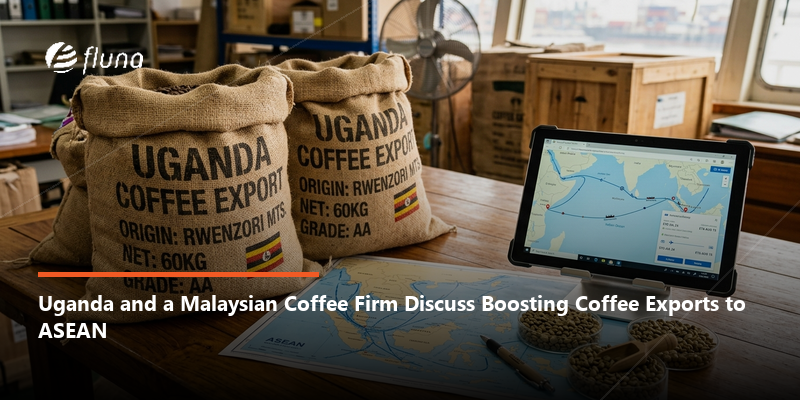
Uganda and a Malaysian coffee firm discuss boosting coffee exports to ASEAN
By Sandra Nansbuga
Uganda and a Malaysian Coffee Firm Discuss Boosting Coffee Exports to ASEAN
Strategic trade negotiations between East Africa's premier coffee origin and Southeast Asian commercial enterprises are unlocking major new market channels across the Asia-Pacific region. As emerging consumer markets across Southeast Asia experience rapid coffee consumption growth, high-level bilateral talks between Ugandan authorities and Malaysian trade conglomerates are establishing direct supply routes. Analyzing how expanding bilateral trade drives Uganda coffee export volumes into the ASEAN trade bloc allows international commercial roasters and commodity traders to evaluate new demand dynamics, track changing trade flows, and anticipate origin supply allocations.
According to bilateral trade reporting published by SoftPower News, executive leadership from the Ugandan Ministry of Foreign Affairs and agricultural trade representatives held high-level discussions with leading Malaysian coffee processing firms. Supported by market development programs from the UCDA / MAAIF and policy guidance from the Ministry of Agriculture, these discussions focus on creating regular maritime supply corridors connecting the Port of Mombasa directly to Port Klang and Penang.
Market Diversification and Uganda Coffee Export Expansion in ASEAN
The Association of Southeast Asian Nations (ASEAN) represents a dynamic market of over 680 million consumers, where rising disposable incomes, expanding urban cafe culture, and booming soluble coffee manufacturing are driving unprecedented demand for raw green coffee. Historically, Malaysian roasters and food conglomerates relied heavily on regional suppliers in Vietnam and Indonesia. However, recent climate disruptions and rising production costs in traditional Asian origins have prompted industrial processors to look toward East Africa for dependable, high-density canephora supplies.
Ugandan Robusta Screen 18 and Screen 15 Clean Naturals offer Malaysian processors exceptional soluble extraction yields and bold espresso body, making them ideal for the region's vast ready-to-drink (RTD) and specialty beverage sectors. Furthermore, direct shipping lanes across the Indian Ocean provide favorable maritime transit times of 18 to 25 days from Mombasa to Malaysian ports, significantly faster than typical shipments to European or North American discharge terminals.
Beyond commercial Robusta volumes, the partnership discussions highlight growing interest in Ugandan specialty Arabicas, including Mount Elgon Bugisu AA and organic Rwenzori micro-lots, to supply Malaysia's flourishing third-wave specialty cafe scene. Establishing direct commercial trade links ensures that origin cooperatives gain exposure to fast-growing consumer markets while providing Southeast Asian processors with transparent, high-quality agricultural commodities.
Diversifying export corridors into Southeast Asia strengthens Uganda's commercial resilience by reducing historical over-dependence on traditional European markets while providing producer cooperatives with alternative high-volume trading partners.
| Export Market Region | Primary Preferred Coffee Grade | Average Maritime Transit from Mombasa | Key Sourcing Driver | Projected Demand Trajectory |
|---|---|---|---|---|
| ASEAN (Malaysia, Singapore) | Robusta Screen 18 & Bugisu AA | 18 – 25 Days (Direct Indian Ocean) | Soluble RTD manufacturing & specialty cafes | High growth (>15% annual increase) |
| European Union (Italy, Germany) | Screen 18 Naturals & Fine Robusta | 35 – 50 Days (Via Red Sea / Cape) | Traditional espresso blending & EUDR compliance | Mature, stable volume base |
| North Africa (Morocco, Algeria) | Unwashed Drugar & Robusta Screen 15 | 25 – 35 Days (Mediterranean route) | Traditional dark roast commercial consumption | Rapidly expanding trade share |
What this means for buyers
Anticipate Asian Demand Competition: European and American buyers should recognize that rising ASEAN demand for Ugandan Screen 18 Robusta may tighten spot availability, reinforcing the importance of early forward contracting.
Explore Multilateral Trade Financing: Importers operating across Asian and Middle Eastern corridors can leverage bilateral trade frameworks to secure favorable letter-of-credit terms and streamline customs clearance.
Optimize Indian Ocean Logistics: Buyers supplying Asian roasting facilities can take advantage of direct Mombasa-to-Port Klang ocean routes, capitalizing on shorter lead times to minimize inventory holding costs.
Establish Direct Cooperative Partnerships: Connect directly with integrated Ugandan exporters who maintain dedicated export allocations for emerging non-European markets to ensure consistent seasonal supply.
Monitor Origin Price Differentials: Track physical FOB Mombasa pricing as diverse geographic demand creates stronger baseline price support across all commercial and specialty grades.
Diversify Sourcing Ports: Coordinate with freight forwarders who maintain direct shipping allocations on Indian Ocean liner services to avoid transit bottlenecks during peak harvest periods.
FAQ
Q: Why is Malaysia expanding green coffee imports from Uganda?
A: Malaysian coffee processors seek high-density, defect-free Ugandan Robusta to supply expanding domestic soluble coffee manufacturing and regional ASEAN retail cafe chains.
Q: What is the transit time for coffee shipping from Uganda to Malaysia?
A: Ocean transit across the Indian Ocean from the Port of Mombasa to Port Klang typically takes 18 to 25 days, significantly faster than shipments bound for Europe or North America.
Q: How does ASEAN demand affect global buyers of Ugandan coffee?
A: Increased demand from Southeast Asian markets broadens Uganda's buyer base, creating competitive pricing for premium grades and encouraging buyers worldwide to secure forward contracts early.
Sources: SoftPower News | UCDA / MAAIF | Ministry of Agriculture